
One moves water by gravity to somewhere lower; the other lifts it because there is nowhere lower to go.
What is the difference between a French drain and a sump pump?
One moves water by gravity to somewhere lower; the other lifts it because there is nowhere lower to go.
Which one does a Syracuse lot need?
Fall decides it. Where a lot has fall, a drain needs no power and nothing to fail; where it has none, a pump is not the cheaper option but the only one.
Which costs less to install and to run in Syracuse?
A gravity drain is priced by run length and depth. A pump is priced by the basin, the power to it, and the discharge line. Where a lot has fall, the drain is cheaper to fit and free to run. That is the comparison worth making over years.
When neither a drain nor a pump is the answer
Neither, where the ground falls toward the house. Fix the grade first, then see how much water is left. A system sized against an uncorrected slope is sized against a problem that did not need to exist.
Get a drainage estimate in Syracuse
This work cannot be priced from a description. Three things decide it. What the ground does with water. How much fall the site has. Where the water may go at the end. All three are facts about an address, and none of them show up in a photograph. Send the address and what you are seeing. Someone who does this work in Syracuse takes it from there. If it turns out to be a different job than this one, that is worth hearing before the digging.
Syracuse Utah French Drain drainage services.
Read what a Syracuse drainage job costs before calling anyone, and check the Syracuse Utah French Drain service area to see whether your street is covered.
Back to Syracuse Utah French Drain.
The ground under Syracuse
A drain cannot drain into water that is already there
The shallowest mapped water table sits 3.1 inches down
A gravity drain needs somewhere lower to go. Where the seasonal water table is inches from the surface, there is no lower for part of the year, and a pump is doing work that gravity cannot do rather than work it could have done for free.
USDA NRCS Soil Survey Geographic Database (SSURGO), via Soil Data Access
Ground built to hold water is the case for a pump, not against one
The wettest mapped soil here is 100% susceptible to ponding
The higher that share runs, the more of the map unit is a closed low spot where water is expected to stand rather than reach a downhill outfall a trench could use. That is the situation a pump exists for, and it is worth knowing before comparing the two on price.
USDA NRCS Soil Survey Geographic Database (SSURGO), via Soil Data Access
Questions people actually ask
Which one does my lot need?
Fall decides it. Find the lowest point you may discharge to and compare it with the wet area. If it is lower, a gravity drain works and needs 1 inch of fall every 8 feet. If it is not, a pump is the only option rather than the cheaper one.
Which costs less to run?
A drain, because it costs nothing. A pump draws power every cycle and needs replacing every 7 to 10 years. Over 20 years that is 2 to 3 pumps plus the running hours, against a pipe that has no moving parts.
What happens to a sump pump in a power cut?
It stops, which is when basements flood. A battery backup runs a typical pump for 5 to 7 hours. A gravity drain has nothing to lose power, which is the argument for it wherever the fall exists.
Can a lot have both?
Often it should. A drain collects the water and a pump lifts it where the last 3 or 4 feet cannot be found by gravity. They are not competing products; they solve 2 different halves of the same run.
Where can a pump discharge to?
Somewhere at least 10 feet from the foundation and falling away, never back into the ground beside the house and generally not into a sanitary sewer. A discharge line that loops back is a pump running 24 hours a day on its own water.
Trusted across Syracuse, Utah and Davis County
What this site is good for
-
Residential and commercial
A house with a wet basement and a site with standing water on a hardstanding are different jobs at different scales. Both are covered, and the pages say which is which.
-
Free, and nothing attached
Working out which job you actually have costs nothing and commits you to nothing. There is no fee to you at any point, because this site is paid by the contractor and not by you.
-
Your details are not for sale
An address sent here goes to a drainage contractor working in the area. It is never sold, and never passed to a second firm.
-
Permits named, not glossed
The pages name the authority that issues the permit for this work and the inspection that goes with it, so you can ask to see one before the first cut.
-
Every figure sourced and dated
Soil, rainfall and housing figures each name where they came from and when they were retrieved. Where a published estimate carries a margin of error, the margin is shown too.
-
One town, covered properly
This site is about one place and the towns within a short drive of it. It is not a national directory with a city name dropped into a template.
-
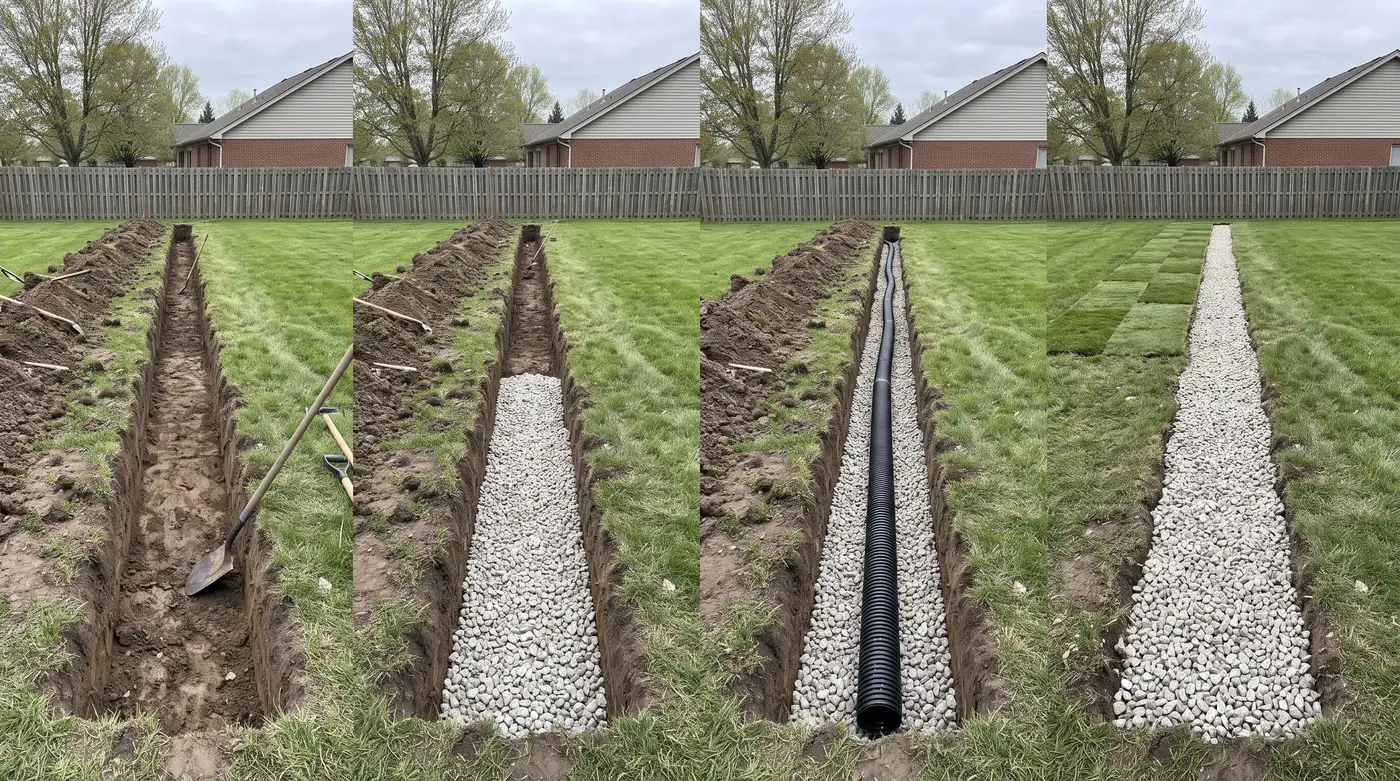
One run at four stages. The stone is the drain; the pipe is only how the water it collects gets out. -
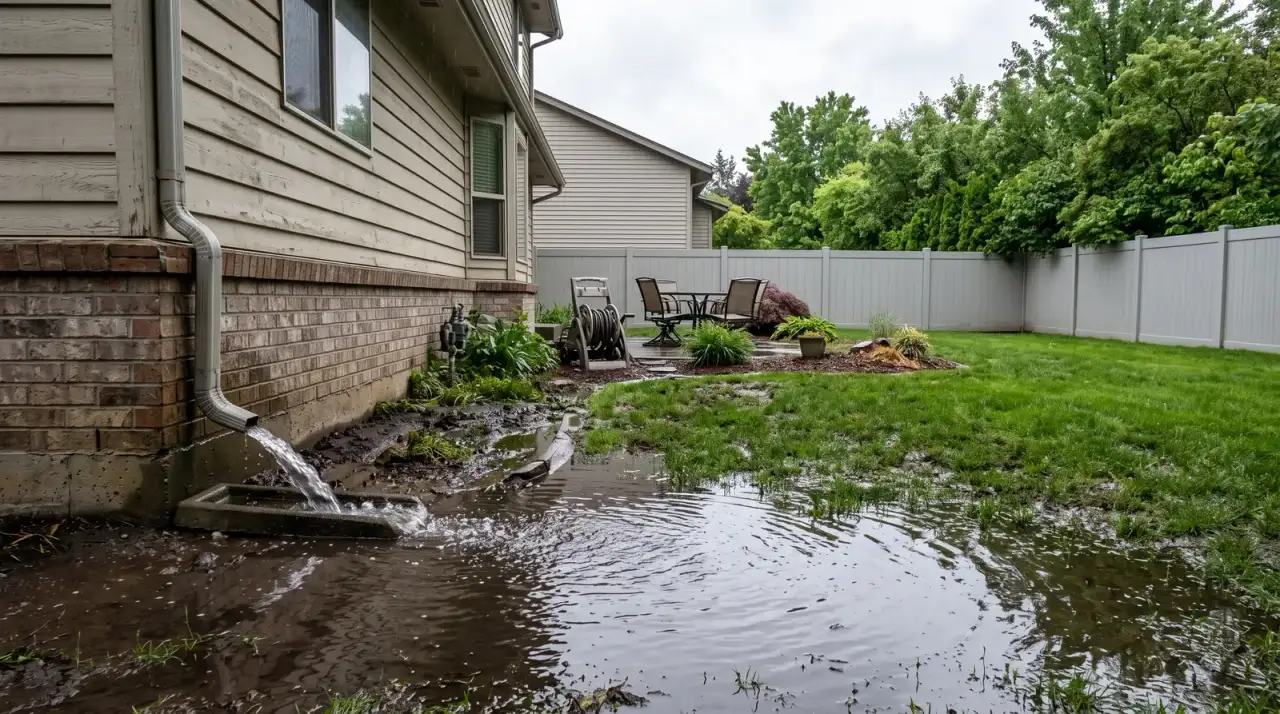
Water standing at grade. Ground that sheds rather than takes is what puts it there. -
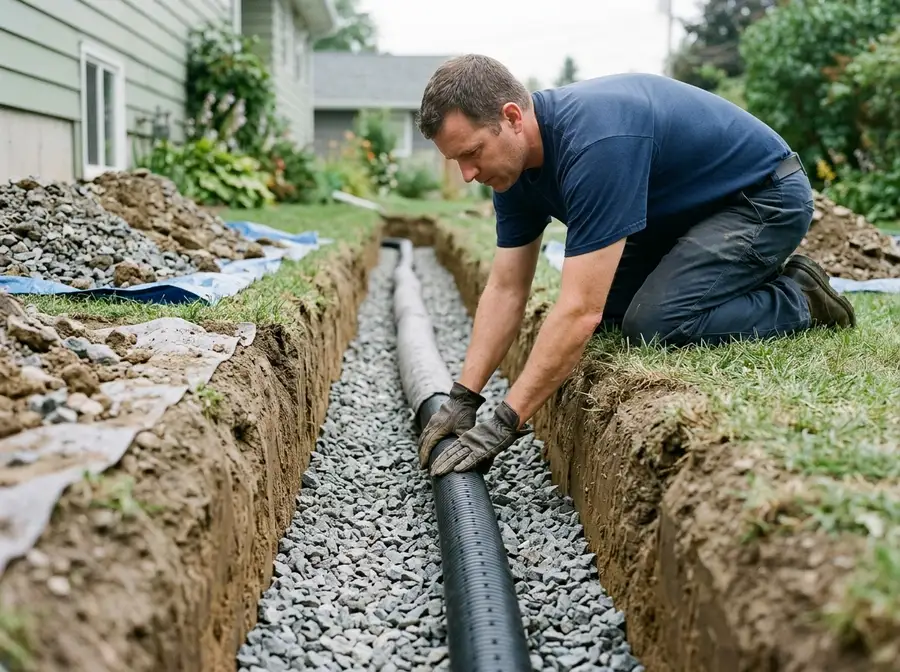
Pipe seated on the stone bed. Trench walls cut clean, so no soil falls back into the stone.

Ground that is saturated has nowhere to put the next storm, and water sitting against a wall keeps working on it.
What happens after you send an address
-
The address first, and only then who you are
The first screen asks for the property address and checks that a contractor covers it. Only if one does does it ask for a name, a phone number and an email — there is no point taking your details to tell you nobody serves your street.
-
Your details are not for sale
It goes to a drainage contractor working in Syracuse. The details are never sold, and never passed to a second firm.
-
No cost, and nothing attached
There is no fee for sending an address and no obligation that follows from it. Deciding the work is the wrong work is a perfectly good outcome.
-
Who does the work
An independent drainage contractor, not the publisher of this site. Who runs this site, and where every figure on it comes from, is set out on the about page.