
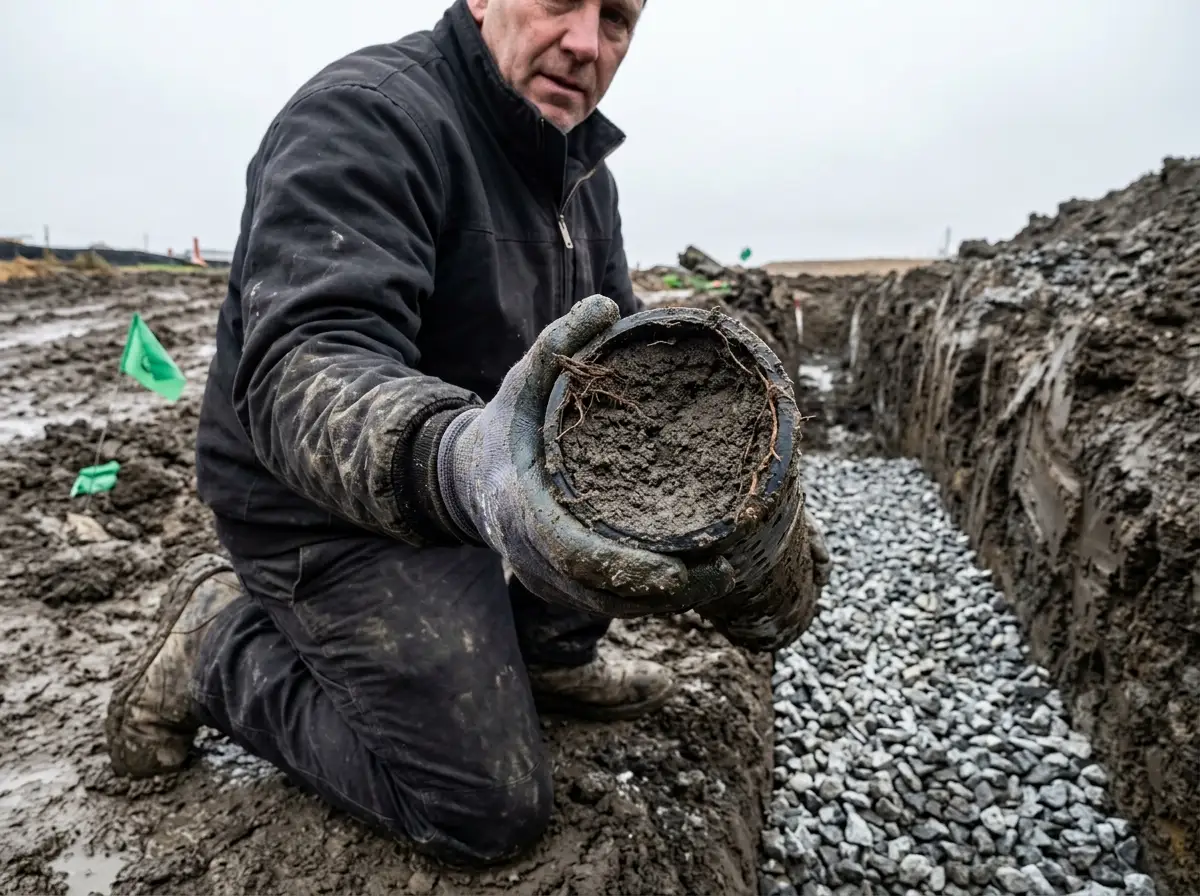
A drain that has stopped is silted, root-bound, or crushed, and a pump that has stopped is a switch, an impeller, a valve, or a blocked discharge. Each has a different price.
Find the fault before anyone quotes the fix
A camera survey settles this in a morning and it is the cheapest money on this page. Silt jets out and the line is fine afterwards. Roots need cutting and usually a liner. A crushed or collapsed run has to be dug up, and that is the only one of the three that costs like a new drain.
Anyone quoting a rebuild without having looked inside the pipe is pricing the worst case because they do not know. Ask for the footage where the fault sits and what the camera showed. Two quotes for the same line can describe three very different jobs.
For a pump, listen before you replace. A pump that runs and moves nothing is an impeller or a check valve. One that will not start is a switch or power. One that runs constantly and does move water is not faulty at all — it is reporting groundwater, and replacing it buys a quieter version of the same running hours. The answer to that one is the drain feeding the basin.
That choice has a page of its own: French Drain vs Sump Pump in Syracuse, UT.
The jobs this covers, and what each one costs to get wrong
French Drain Repair
Locating the blockage or collapse in an existing line, then cleaning, relining or rebuilding that section. It applies when a drain that once worked has stopped. Silt, roots and crushed pipe are the three causes, and they need different answers.
What moves the price. Finding the fault before pricing the fix. Silt jets out. Roots need cutting and a liner. A crushed run has to be dug up. Three causes, three very different day counts, and a camera tells them apart.
When French drain repair is the wrong answer. A drain that never worked was not built for the water it gets. Repairing it restores a system that was too small. Where the run is too short, too shallow, or ends nowhere, the honest job is a new one.
Sump Pump Repair
Diagnosing a pump that runs and moves nothing, runs constantly, or does not start — switch, impeller, check valve or discharge. It applies when the basin is the symptom rather than the cause. A pump running constantly is usually telling you about groundwater, not about itself.
What moves the price. Which of the four it turns out to be. A switch is an hour. A frozen or crushed discharge line can be a trench. Both arrive as the same complaint. Access to the basin, and whether power is already there, decide the rest.
When sump pump repair is the wrong answer. A pump that runs often and moves water is not faulty. It is reporting groundwater. Replacing it buys a quieter version of the same running hours. The drain feeding the basin is where the answer is.
Retaining Wall Drainage
Stone, filter fabric and a drain line behind a wall, plus weeps through it. It applies because walls fail on water pressure rather than on load. A wall holding back saturated soil carries far more than the soil weighs dry.
What moves the price. Whether the wall is going up or already stands. Stone, fabric and a line behind a new wall are a small part of that build. Adding the same layer later means taking the face down and building it again.
When retaining wall drainage is the wrong answer. A wall leaning because it was too light for what it holds will lean whether or not it drains. Drainage buys nothing on a wall that has failed. The two have to be told apart before either is priced.
Get an estimate in Syracuse
None of this can be priced from a description. Three things decide it. What the ground does with water. How much fall the site has. Where the water may go at the end. All three are facts about an address, and none of them show up in a photograph. Send the address and what you are seeing. Someone who does this work in Syracuse takes it from there. If it turns out to be a cheaper job than the one you came here for, that is worth hearing before anyone digs.
Syracuse Utah French Drain drainage services.
Read what a Syracuse drainage job costs before calling anyone, and check the Syracuse Utah French Drain service area to see whether your street is covered.
Back to Syracuse Utah French Drain.
The ground under Syracuse
Fine soil is what silts a drain up and ends its life early
Surface clay runs as high as 22% here
Clay content is the share of the soil made of the finest particles. Those are the particles that travel with water into a gravel bed and eventually block it, which is why fabric choice and washed stone matter more on some streets than others.
USDA NRCS Soil Survey Geographic Database (SSURGO), via Soil Data Access
A drain that never had anywhere to discharge will fail again
The slowest mapped ground takes water at 0.13 inches an hour
A french drain has to end somewhere lower than it starts. On slow ground a trench that simply stops is a reservoir, and re-digging it without fixing the outfall repeats the original mistake.
USDA NRCS Soil Survey Geographic Database (SSURGO), via Soil Data Access
Questions people actually ask
What does a camera survey involve?
A camera on a rod, run from an access point or a dug-out end, recording distance as it goes. Usually 1 to 2 hours on a residential line. It returns the footage of the fault and what kind of fault it is, which is what turns 3 possible jobs into 1.
How long does a French drain last?
A drain built with clean stone and a filter wrap lasts 30 to 40 years. One built without the wrap can silt shut inside 10. That difference is invisible from the surface and is why the camera comes first.
Can a silted drain be jetted instead of dug?
Often, yes, and it costs a fraction of excavation. Jetting works on silt and light root intrusion. It does not fix a crushed pipe or a run laid without fall, and a line that silts again within 12 months is telling you it was laid flat.
My sump pump runs every few minutes. Is it failing?
Probably not. A pump cycling every 2 to 3 minutes in wet weather is handling a high water table, which is the job. Cycling that often in dry weather usually means the check valve is letting water back into the basin — a part, not a pump.
Why do retaining walls fail on drainage?
Because saturated soil pushes roughly twice as hard as dry soil. A wall built for the dry load leans when the drain behind it blocks. Weeps every 6 to 8 feet and a clear line behind the stone are what stop it, and adding them later means taking the face down.
Trusted across Syracuse, Utah and Davis County
What this site is good for
-
Residential and commercial
A house with a wet basement and a site with standing water on a hardstanding are different jobs at different scales. Both are covered, and the pages say which is which.
-
Free, and nothing attached
Working out which job you actually have costs nothing and commits you to nothing. There is no fee to you at any point, because this site is paid by the contractor and not by you.
-
Your details are not for sale
An address sent here goes to a drainage contractor working in the area. It is never sold, and never passed to a second firm.
-
Permits named, not glossed
The pages name the authority that issues the permit for this work and the inspection that goes with it, so you can ask to see one before the first cut.
-
Every figure sourced and dated
Soil, rainfall and housing figures each name where they came from and when they were retrieved. Where a published estimate carries a margin of error, the margin is shown too.
-
One town, covered properly
This site is about one place and the towns within a short drive of it. It is not a national directory with a city name dropped into a template.
-
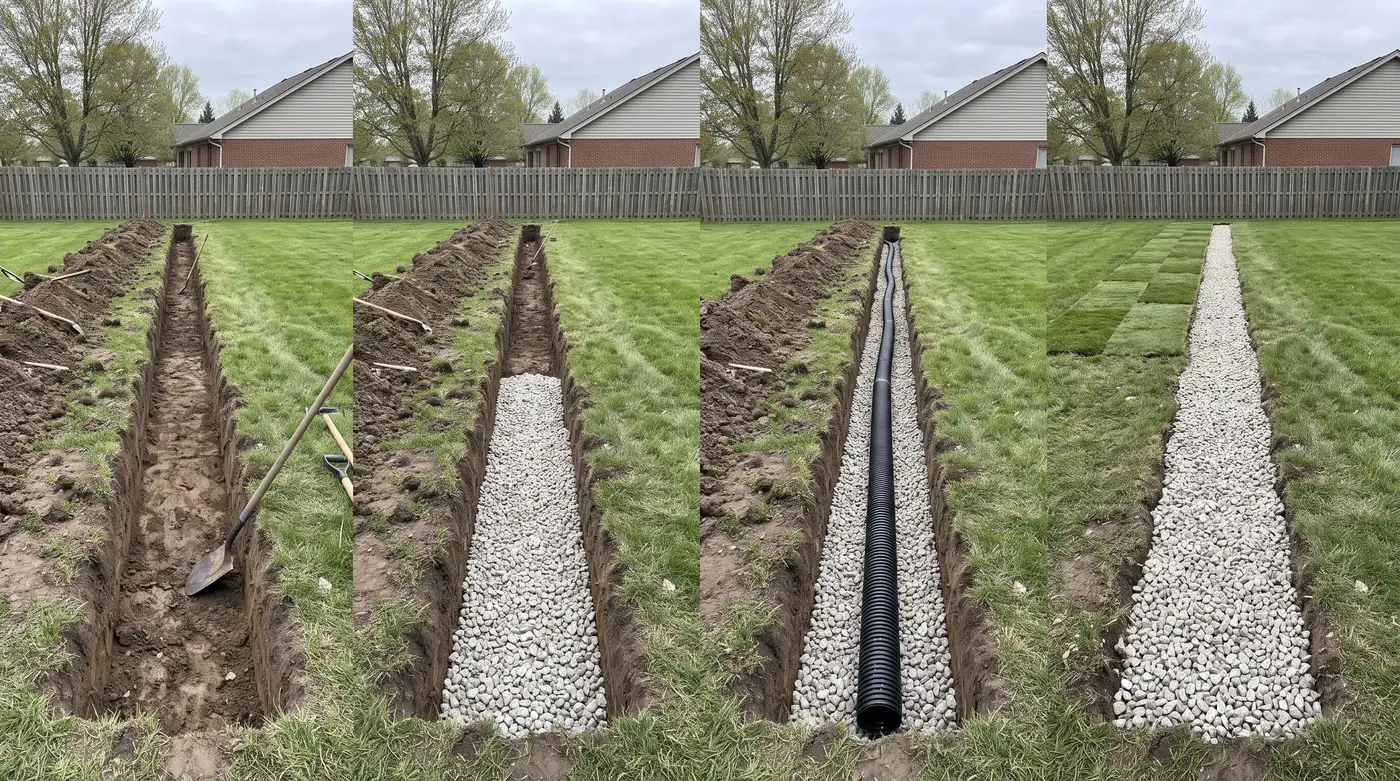
One run at four stages. The stone is the drain; the pipe is only how the water it collects gets out. -
Water standing at grade. Ground that sheds rather than takes is what puts it there. -
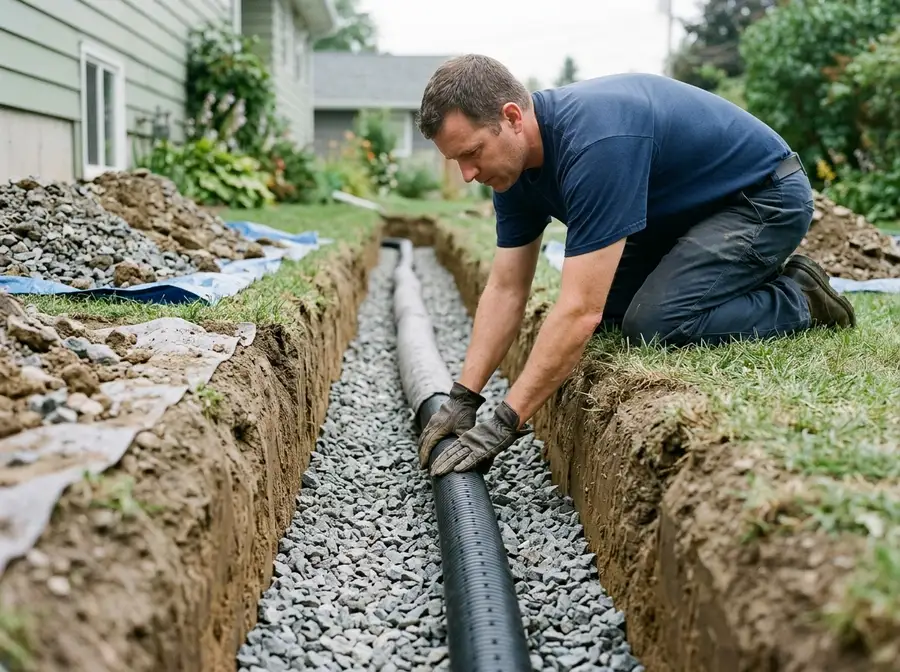
Pipe seated on the stone bed. Trench walls cut clean, so no soil falls back into the stone.

Ground that is saturated has nowhere to put the next storm, and water sitting against a wall keeps working on it.
What happens after you send an address
-
The address first, and only then who you are
The first screen asks for the property address and checks that a contractor covers it. Only if one does does it ask for a name, a phone number and an email — there is no point taking your details to tell you nobody serves your street.
-
Your details are not for sale
It goes to a drainage contractor working in Syracuse. The details are never sold, and never passed to a second firm.
-
No cost, and nothing attached
There is no fee for sending an address and no obligation that follows from it. Deciding the work is the wrong work is a perfectly good outcome.
-
Who does the work
An independent drainage contractor, not the publisher of this site. Who runs this site, and where every figure on it comes from, is set out on the about page.