
Call a drainage or foundation contractor first. In Syracuse the water in a basement is almost always groundwater arriving from outside, not a pipe that failed inside. Three things change that answer. A sewage smell means a plumber. Clean water running when it has not rained means a supply leak, so call a plumber. Standing water more than an inch deep means a water damage firm first, and the cause second.
What kind of water is it?
Who to call is decided by what you are looking at, and working it out takes about a minute. Five things tell you most of it.
Where it appears. Water along the base of a wall, or at the joint where the wall meets the floor, came through from outside. Water in the middle of the floor, away from any wall, came up from below. Both are drainage. Water running down a wall from above started somewhere else in the house.
Whether it followed rain. Water that shows up during a storm, or within a day of one, is surface water or a risen water table. Water that appears in dry weather at the same rate every day came out of a pipe.
What it smells like. Clean water has almost no smell. Anything that smells of sewage is a drain or sewer problem and it is a plumber’s job before it is anyone else’s. Do not stand in it.
Whether it is clear. Silt and grit in the water mean it traveled through soil to get in. That is groundwater, and it is the case for a drainage contractor rather than a plumber.
How much of it there is. A damp patch and a puddle are the same problem at two sizes. Standing water deep enough to cover a shoe is a different job, and the first call there is to a water damage firm. The cause can wait a day. Wet insulation cannot.
Who does each of these jobs
Four trades answer a wet basement, and they overlap less than the search results suggest.
A drainage or foundation contractor handles water arriving from outside: grade, downspouts, exterior drains, interior perimeter drains and sump systems. This is the right first call for most basement water. It is also the trade that can tell you the fix is a downspout rather than a dig.
A plumber handles water that came out of a pipe. Supply lines, water heaters, washing machine hoses, and sewer or floor drain backups. A plumber is the wrong call for groundwater and will usually say so, but the visit is still billed.
A water damage restoration firm removes standing water and dries the structure out. They do not fix the cause and mostly do not claim to. Call them when there is enough water to soak carpet, insulation or drywall, and call someone else afterwards.
A structural engineer earns the fee when a wall is bowed, cracked across rather than up, or moving. That is a structural problem that happens to be wet, and it should be diagnosed before anyone waterproofs over it.
There is a fifth call and it is not a trade. Work that changes the level of the ground, adds a retaining structure, or connects to a public drain is usually permitted work, and the office that issues the permit decides what is allowed. That is a phone call before a quote rather than after one.
What to have ready before you call anyone
Whoever you ring, the same five things shorten the visit and sharpen the price.
- The address. More of the answer is decided by the ground under the house than by anything else, and the address is what makes that knowable before anyone arrives. - When it happens. During rain, after rain, in spring only, or all year round. That one sentence separates surface water, a seasonal water table and a leak. - Where it comes in. One wall, several walls, the floor, or a single corner. Photograph it while it is wet. - What is outside that wall. A downspout, a patio, a driveway, a neighbor’s slope. Walk the 10 feet of ground around the wet spot and look at it. - What has already been tried. Sealant, a dehumidifier, a sump pump, regrading. Knowing what did not work rules out paying for it twice.
None of that needs a specialist to collect, and it is the whole difference between a price written from a photograph and one written from the ground.
Get someone to look at it in Syracuse
Send the address and a sentence about what you are seeing. That is enough to say whether this is a drainage job at all, and to put it in front of someone who does this work in Syracuse. There is no fee for the visit and no obligation afterwards.
If the answer turns out to be a downspout, that is worth hearing before anyone quotes a dig. It is the cheapest outcome on the list, and it is the one a contractor selling a system has no reason to raise.
When not to buy one
Water on the floor after a heavy rain, near one wall, with a downspout outside it. Fix the downspout first. Water that seeps through a wall in a wet spring and never in summer. Look at the grade first. A drain installed around either of those is money spent on the wrong cause.
Two checks worth making before anyone quotes you.
- Extend the downspouts. A roof outlet should discharge at least 6 feet from the wall, and 10 is better. One downspout can put hundreds of gallons against a footing in a single storm, and an extension costs a small fraction of a drain.
- Fix the slope. The ground in the first 10 feet should fall away from the house, about 6 inches over that distance. Where it falls toward the house instead, water is being delivered to the wall on purpose.
If either is wrong, correct it and watch one more storm before spending anything larger.
Read what a Syracuse drainage job costs before calling anyone, and check the Syracuse Utah French Drain service area to see whether your street is covered.
Back to Syracuse Utah French Drain.
Questions people actually ask
Who should I call first for water in a Syracuse basement?
A drainage or foundation contractor. Before you call, walk the 10 feet of ground outside the wet wall and check that every downspout discharges at least 6 feet from the house. Those 2 checks take about 5 minutes and they change what you are asking for.
Is water in a basement a plumber's job?
Only if it came out of a pipe. 2 signs point that way: the water arrives at the same rate in dry weather, and it is clean with no grit in it. Water that turns up within 24 hours of rain and carries silt is groundwater, and a plumber cannot do anything about it.
Do I need to call the city about a wet basement?
Not about the water. About the work, sometimes: a change of ground level, a retaining structure, or a connection to a public drain is usually permitted work, and that is 1 call to make before you accept a quote rather than after. A contractor who says no permit is needed should be able to say who told them.
How long can it wait?
Standing water can sit for a few hours. Wet building material cannot. Carpet, insulation and the bottom 12 inches of drywall are usually written off once they have been wet for more than 48 hours, so where the water is over an inch deep that clock is why a restoration firm goes first and the cause goes second.
The basement is only wet in spring. Who does that go to?
A drainage contractor. A basement that is wet for 6 to 8 weeks in spring and dry the rest of the year is following the seasonal high water table rather than a pipe. That is the one pattern where an interior perimeter drain and a sump earn their price, because there is nothing outside to fix.
What does it cost to find out which one I have?
Nothing for the visit. There is no fee at any step of asking through this site and no payment passes through it. What the fix costs is a separate question, and 3 things decide it: what the ground does with water, how much fall the site has, and where the water may go at the end.
Trusted across Syracuse, Utah and Davis County
What this site is good for
-
Residential and commercial
A house with a wet basement and a site with standing water on a hardstanding are different jobs at different scales. Both are covered, and the pages say which is which.
-
Free, and nothing attached
Working out which job you actually have costs nothing and commits you to nothing. There is no fee to you at any point, because this site is paid by the contractor and not by you.
-
Your details are not for sale
An address sent here goes to a drainage contractor working in the area. It is never sold, and never passed to a second firm.
-
Permits named, not glossed
The pages name the authority that issues the permit for this work and the inspection that goes with it, so you can ask to see one before the first cut.
-
Every figure sourced and dated
Soil, rainfall and housing figures each name where they came from and when they were retrieved. Where a published estimate carries a margin of error, the margin is shown too.
-
One town, covered properly
This site is about one place and the towns within a short drive of it. It is not a national directory with a city name dropped into a template.
-
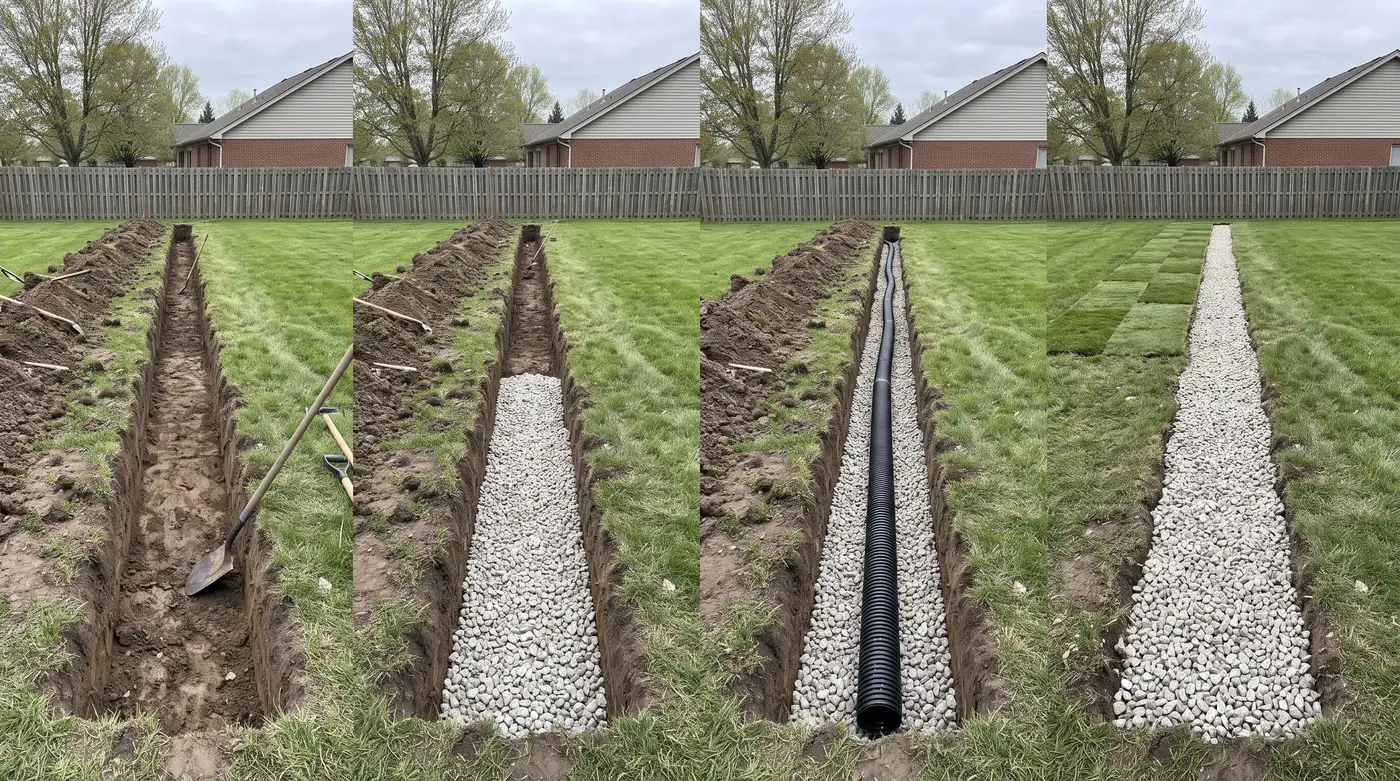
One run at four stages. The stone is the drain; the pipe is only how the water it collects gets out. -
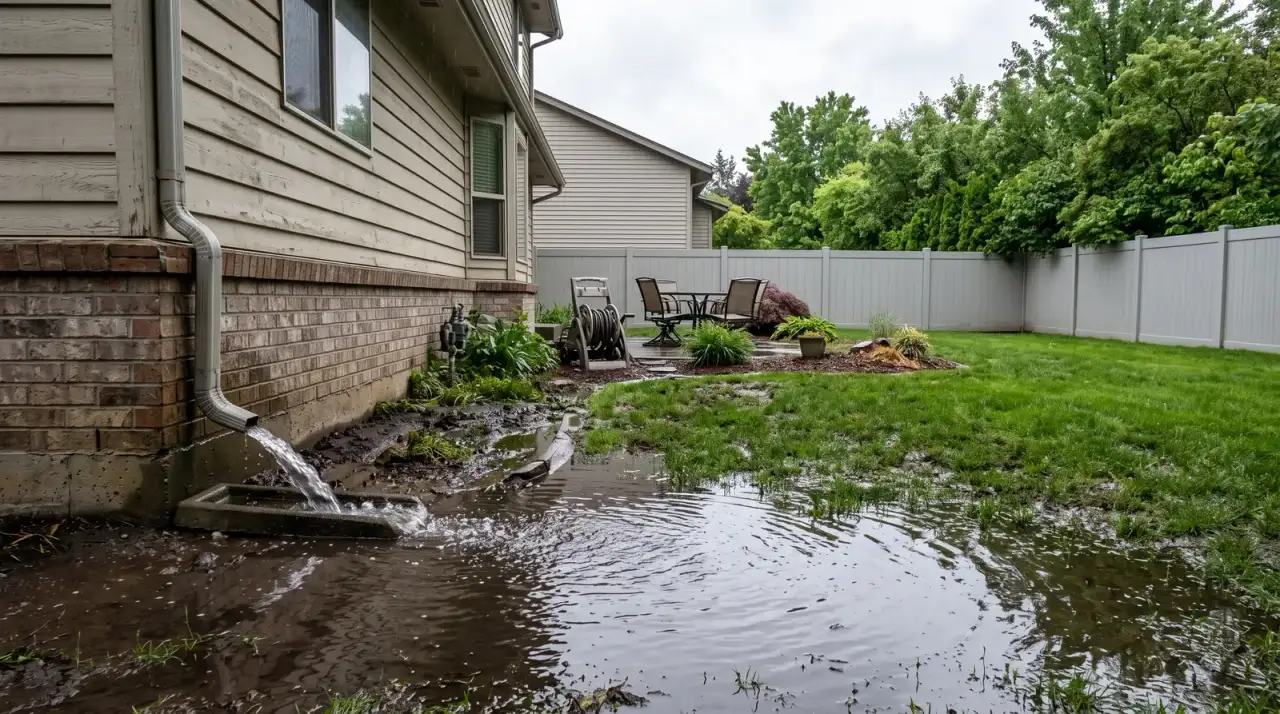
Water standing at grade. Ground that sheds rather than takes is what puts it there. -
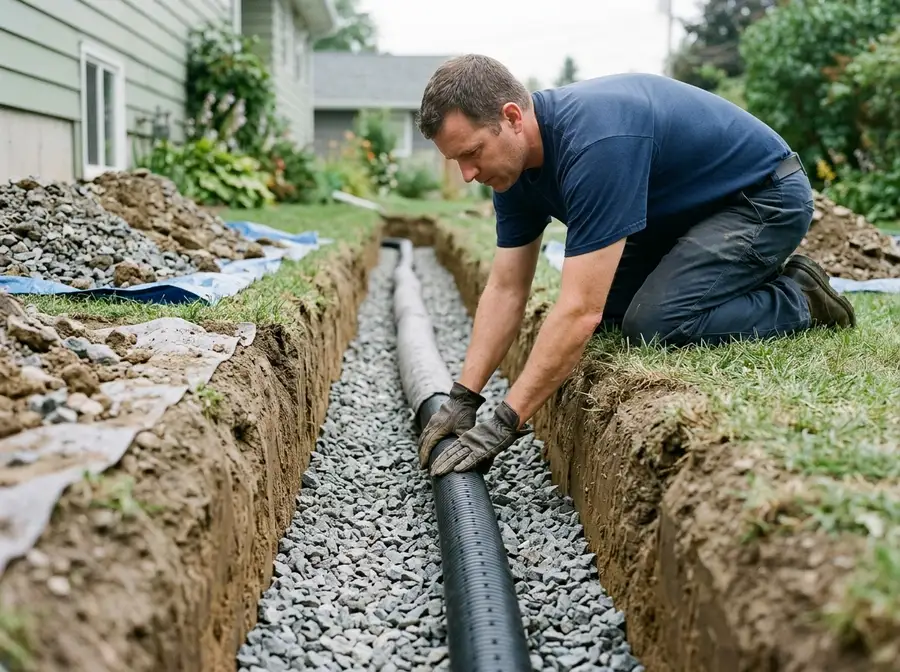
Pipe seated on the stone bed. Trench walls cut clean, so no soil falls back into the stone.

Ground that is saturated has nowhere to put the next storm, and water sitting against a wall keeps working on it.
What happens after you send an address
-
The address first, and only then who you are
The first screen asks for the property address and checks that a contractor covers it. Only if one does does it ask for a name, a phone number and an email — there is no point taking your details to tell you nobody serves your street.
-
Your details are not for sale
It goes to a drainage contractor working in Syracuse. The details are never sold, and never passed to a second firm.
-
No cost, and nothing attached
There is no fee for sending an address and no obligation that follows from it. Deciding the work is the wrong work is a perfectly good outcome.
-
Who does the work
An independent drainage contractor, not the publisher of this site. Who runs this site, and where every figure on it comes from, is set out on the about page.